Introduction

Laptops and notebook memory technology continues to advance as manufacturers consider how to make laptops fast and slim. The two formats, which are discussed in the industry today, are CAMM and SODIMM. Laptops used SODIMM as a long time shop memory module, however, CAMM has the potential to be the new evolution.
What Is CAMM and SODIMM?
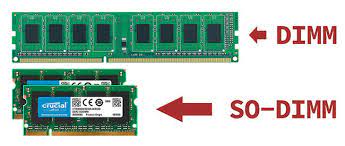
Majority of laptops have SODIMM (Small Outline Dual Inline Memory Module) as the standard format of RAM. It is not as big as desktop DIMM memory, thus manufacturers can install memory modules in devices that are small in size but provide the user with an upgrade option.
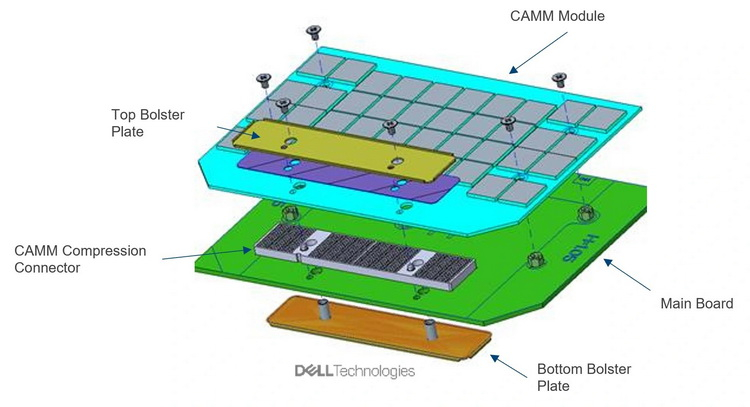
In the new design known as CAMM ( Compression Attached Memory Module ) they will be trying to make memory faster, cooler and reduce space usage. infty SODIMM is slot based, CAMM is flat based with attachment to the motherboard via compression connectors.
Two memory form factors are used in laptops and compact computers, namely CAMM (Compression Attached Memory Module) and SODIMM Dell Precision. SODIMM is an established standard that has been many years old providing a smaller size of layout that fits with most consumer laptops. CAMM is more recent and it tries to enhance performance, minimize thickness and increase the thermal efficiency. The comparison of the two enables users to know the future of memory technology.
Why It Is Important
The design of memory is also important in terms of the performance of the laptops and future upgradeability. The advantage of SODIMM modules is that they are easy to mount and modify, and one can upgrade the RAM when required.
CAMM can not only help makers to craft thinner devices but is also more efficient and fast. It may be more challenging to upgrade, however, depending on the manner in which the manufacturers adopt the new design.
The use of SODIMM modules is popular due to their compatibility and the possibility to be replaced easily. They allowed the user to add or delete modules by just adding or removing them in the slots. CAMM has a more combined and compact design. This may enhance the quality of a signal and minimize latency particularly in high-performance systems. It can however restrict user upgrades based on the design of the device.
A brief outline assists an online reader to understand professional matters. To simplify hardware guide and tutorial finding, many magazine blogs are using magazine Blogger templates.
Main Key Factor Points
- Standard defined: SODIMM is old and has smooth upgrade paths.
- New design methodology: CAMM employs flat compression based module in place of slots.
- Potential performance benefits: CAMM could allow the memory to operate more quickly and remain cooler.
- Device design impact: New memory formats allow makers to make slimmer products.
- Upgrade considerations: CAMM has the potential to decrease upgrade flexibility to users.
The standard layouts, such as WindSpot Blogger Template that creates the comparisons between products and the description of the hardware, are better read when used in technology tutorials.
In the selection of the CAMM and SODIMM, look at the flexibility of upgrade, compatibility of the device, and its longevity. Technical advantages might be found with CAMM, yet SODIMM is still feasible to the majority of users with the common usage. The knowledge of the two choices enables users to make good choices when buying or replacing laptops. Flexibility is important, but so is the need to balance between performance needs and flexibility.
Conclusion
There are two versions of CAMM and SODIMM versions of laptop memory design. SODIMM has continued to dominate the industry. In case CAMM is adopted by manufacturers in a large scale, it may alter the manner in which hardware of laptops will be manufactured in future. The awareness of how these technologies operate enables better decisions to be made by the users in regards to purchasing or updating laptops.


