
Walk into almost any American high school gymnasium or main hallway ten years ago, and you saw the exact same layout. Painted wooden plaques, etched metal plates, and heavy vinyl banners hung high on the cinderblock walls. They looked great the day they were installed. Then a varsity track athlete broke a school record a week later, and that brand new display was immediately out of date.
Updating it meant calling a vendor, waiting six to eight weeks, and spending money from an already tight athletic budget. Administrators and athletic directors are moving away from these static displays. They are opting for smart display systems instead. The shift comes down to basic facility management, budget realities, and operational efficiency.
The Maintenance Bottleneck
Keeping track of student achievements used to require a surprisingly heavy logistical lift. If you manage a facility, you know that buying physical record boards for schools is only the first step. The real friction happens during the maintenance phase. When the swimming team sets a new relay time or the basketball team wins a regional championship, someone has to facilitate the physical update.
This usually falls on the athletic director or a club volunteer. They have to:
- Track down the original manufacturer (sometimes that local sign company went out of business three years ago).
- Request a quote for a new vinyl decal or an etched metal plate.
- Navigate the purchase order approval process through the district office.
- Work with a custodian to get a ladder or lift and update the board before the next game.
It is a tedious process for a very simple task. Multiply that by dozens of sports, academic achievements, and fine arts awards across a busy nine-month academic year. The administrative time adds up quickly. District operators are realizing they do not have the staff hours to dedicate to manual updates.
Adapting to Multi-Use Facilities
School buildings are not static environments. The main gymnasium might host a physical education class on Tuesday morning, a community voting location on Tuesday night, and a massive regional robotics tournament by Saturday. Physical banners and static plaques only serve one of those audiences.
Smart display systems allow a school to adapt the environment to the specific event. An administrator can schedule content to match exactly what is happening in the room:
- Theater Productions: When parents arrive, the screens in the lobby show cast photos, run times, and upcoming show dates.
- Athletic Invitationals: When the wrestling team hosts a weekend tournament, those same screens display live brackets and mat assignments.
- Testing Periods: During SAT testing, the screens can simply display quiet zone warnings and clock countdowns.
Signs that can change instantly make the building much more useful. Instead of a hallway dedicated permanently to one graduating class or one specific championship team, the walls become dynamic. Schools highlight a much wider variety of students without needing to build custom trophy cases or find empty wall space in older buildings.
Consolidating the Visual Clutter
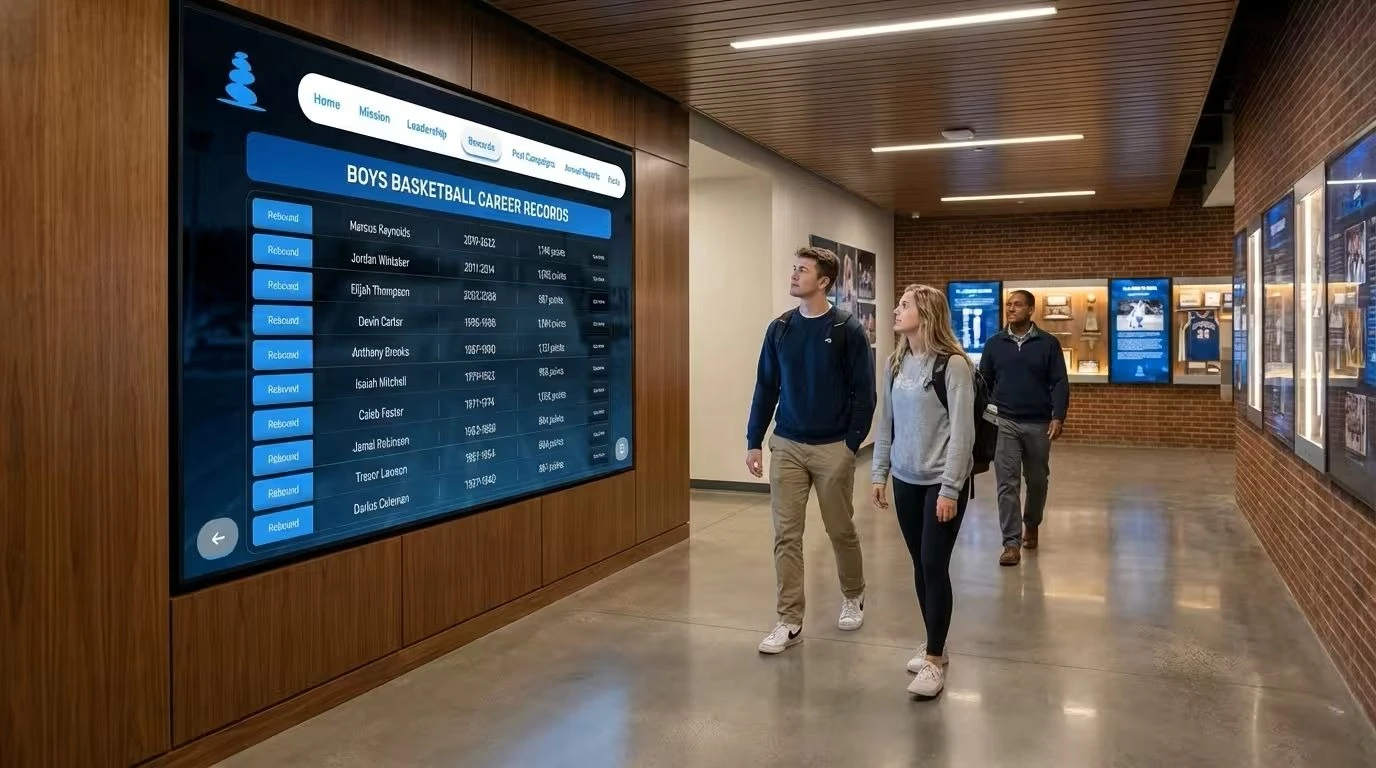
Take a close look at the main entrance of a typical high school built in the 1970s. You will usually find a messy overlapping collection of paper flyers taped to glass doors, permanent plaques from decades, and temporary banners zip-tied to stair railings. Important operational information gets lost easily because every department is competing for the same physical real estate.
Switching to a digital record board solves the space constraint issue immediately. You can cycle through the all-time track and field stats, the current AP Scholar honor roll, and the upcoming college signing day schedule all on the exact same footprint.
This eliminates the need to negotiate which program gets the prominent spot outside the cafeteria. Every department gets their time on screen. The facility looks cleaner and more modern. Custodial staff spend less time scraping old masking tape off the walls. It is a straightforward upgrade that improves the daily operating environment for staff and students alike.
Centralized Content Management
The hardware is only part of the equation. The software running these displays is what actually drives the switch. Ten years ago, running a digital screen meant someone had to load files onto a USB thumb drive and physically plug it into the back of a television monitor. Nobody wants to do that on a Friday afternoon before a big rivalry football game.
Today, the content management systems are entirely cloud-based.
- A communications director can sit at their desk in the district office and push a new graphic to screens across three different high schools simultaneously.
- If there is a sudden schedule change for a playoff baseball game due to weather, the update goes live in seconds across the entire campus.
This centralized control removes the bottleneck of relying on on-site staff to manage messaging. Principals and front office staff can pre-schedule morning announcements, lunch menus, and emergency alerts weeks in advance. The IT department can also restrict user permissions, ensuring that coaches can only update their specific sports slides while administration maintains control of the master layout.
Budget Reallocation and Sponsorships
Upfront costs for commercial-grade screens and software licenses are higher than buying a wooden plaque. Operators who look at a five-year budget horizon see a very different financial picture.
Static signs require a perpetual budget for updates, repairs, shipping costs, and physical installation. Every time a record falls, money leaves the athletic department. A smart display requires an initial capital expenditure and a small annual software fee, but the incremental cost to update graphics is zero.
Many schools use booster club funds or local business sponsorships to cover the initial hardware purchase. Because the screens can display rotating sponsor logos during heavily attended events, they actually become a revenue generation tool. Local car dealerships, real estate agents, and insurance brokers are highly motivated to pay for digital advertising during a Friday night basketball game. The system often pays for itself within a few athletic seasons through targeted local ad sales.
Immediate Recognition
There is a psychological element to this shift as well. Students today are used to instant feedback. When a cross country runner breaks a five-minute mile on a Saturday morning, they should not have to wait until November for the athletic banquet to see their name on the wall.
With a smart system, the coach can text a photo and the time to the athletic director. By Monday morning, that student's achievement is cycling on the main displays in the cafeteria and the gym lobby. That level of immediate recognition builds momentum and culture within a school in a way that delayed static plaques simply cannot match. It validates the hard work in real time.
The transition is happening across the country because it provides a more practical way to operate a building, manage a budget, and communicate with a community. It solves concrete facility problems while offering a better experience for the students walking those halls every day.

